Once when he was serving as priest before God and his section was on duty, he was chosen by lot, according to the custom of the priesthood, to enter the sanctuary of the Lord and offer incense. Now at the time of the incense-offering, the whole assembly of the people was praying outside. Then there appeared to him an angel of the Lord, standing at the right side of the altar of incense. When Zechariah saw him, he was terrified; and fear overwhelmed him. But the angel said to him, ‘Do not be afraid, Zechariah, for your prayer has been heard. Your wife Elizabeth will bear you a son, and you will name him John. (Luke 1:8-13)
The Gospel of Luke opens with John's story. Nothing similar to it - not even the family relationship of John and Jesus - is referenced in the other gospels.
Most scholars consider the claim that John and Jesus were cousins to be propaganda. If so, the gospel writer must have considered John especially important to his principally Greek audience of first and second generation "friends of God." To have John descend from a priestly family is an interesting choice, especially if the narrative is more persuasion than history.
My great-grandfather, grandfather, and father were all named Fred or Frederick. I was named Philip (meaning lover of horses). My father explained that my mother chose my name. Mom said she was reading a book at the time in which the main character's name was Philip.
Before I was ten, the character in that book became Philip, King of Macedon, father of Alexander the Greek. I am no longer certain that my Mom told me this and my Mom's memory is unreliable. I may have made it up.
But it became a sufficiently important element to my internal narrative that I named my son Alexander (meaning gift to humanity). Whether factually true or not, the story of my relationship to Philip of Macedon has become important in itself.

About Me
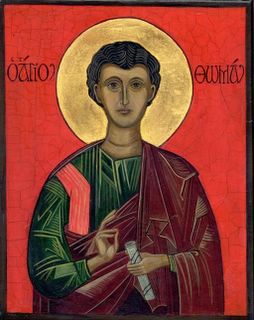
- Didymus
- Each morning I spend 30 minutes, more or less, researching and writing on a passage of scripture. This is principally a form of spiritual self-discipline. But comments and questions are welcome.
No comments:
Post a Comment